
Christmas with Friends vs. Family: How to Choose and Not To Regret It?
Christmas is a festive day and a significant milestone in our lives. And, of course, you want to celebrate it with those who matter most to you.

But sometimes, instead of excitement and anticipation, it turns into an internal test: "Who would be the right people to celebrate Christmas with?"
We're here to help you decide early on so you won't have to ponder and worry right on the eve of the celebration.
Why It's Hard to Choose Between Friends and Family
At first glance, it seems like a simple decision. If you want peace, celebrate with family; if you seek fun, choose friends.
But in practice, it's more complicated. This isn't just about choosing where to go, but a matter of expectations, acceptance, and even unresolved conflicts within groups. Here are some reasons why it's hard to decide:
Fear of Disappointing Someone. This is one of the main reasons why choosing between family and friends is so challenging. Parents might be upset if you decide to spend Christmas with friends instead of home. Friends, in turn, might not understand if you suddenly choose a family gathering. This situation is especially tense if you've always celebrated a certain way and now want to change the tradition.
Fear of Making a Mistake. Another reason why choosing a Christmas celebration format creates internal tension. For some, this holiday is strictly family-oriented, and any deviation from tradition is seen as wrong. For others, it's a chance to break free from routine and do something new, like celebrating at a restaurant, out of town, or even at the movies. Even if you are tired of the usual scenario, you may feel that any deviation will lead to problems or failures in the future.
A Sense of Obligation to Family. Celebrating Christmas is often seen as a family activity: you have to gather with relatives, prepare toasts, and participate in traditional activities. Avoiding this scenario might cause guilt, especially for those whose family expects everything to be "as usual." People worry about disappointing relatives or appearing selfish.
Loneliness in the Wrong Crowd. Sometimes, people gravitate towards friends for freedom and ease. But if the group is random or not too close, there's another fear—spending the night with people with whom there's no real connection. During such times, a sense of anxiety arises: you're not alone, yet not in the right place. This makes it hard to decide on a new format—especially if the social circle is not very stable. There's a confusion: staying home seems dull, going to parents feels formal, and with friends—it's uncertain if it'll go as planned.
Celebrating Christmas with Family
Many underestimate how crucial spending Christmas with family can be, even if it's not the first or even the tenth time celebrating together.
Pros
Sense of Belonging. People love returning to where they're known and accepted from childhood. This can provide stability, especially if the year has been stressful. Then, a festive evening becomes an emotional reset.
Generational Connection. Having dinner with parents or other older relatives is a kind and respectful tradition. Younger ones see how parents or grandparents prepare family dishes, recall personal stories. This brings people closer and forms a sense of shared history. Those who grow up with such traditions are less likely to feel lonely in adulthood.
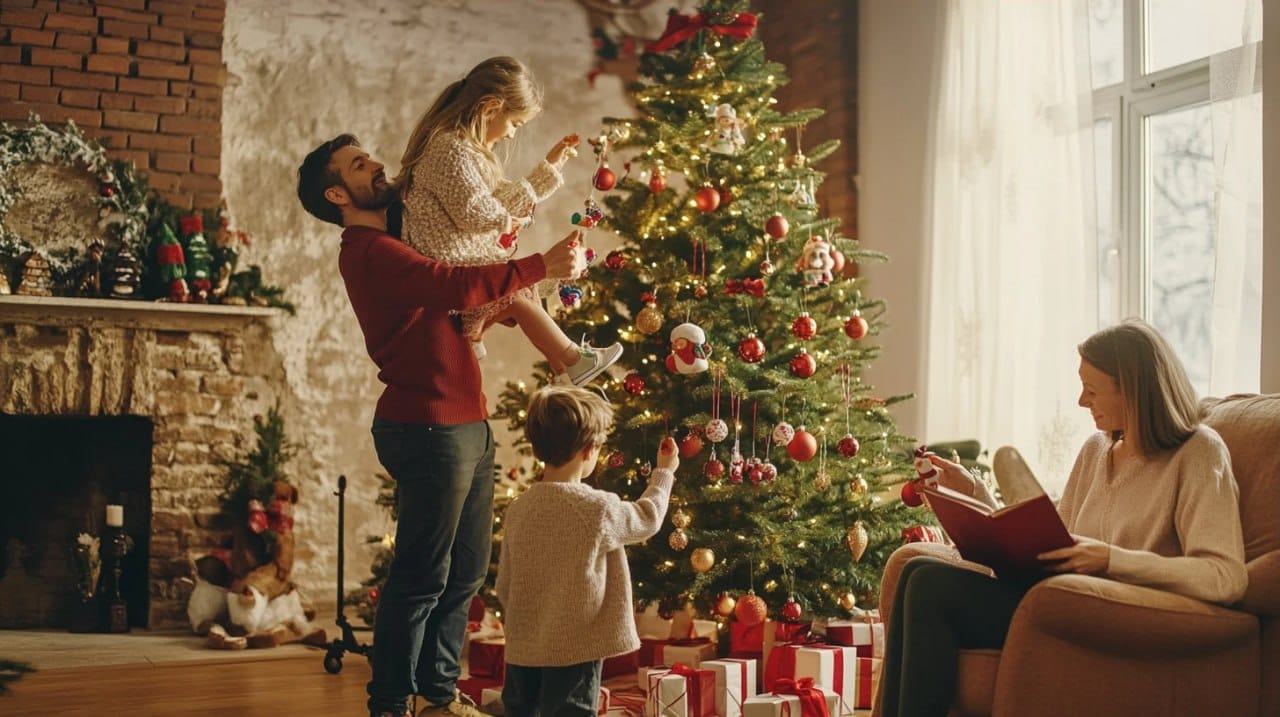
Stability in Chaos. The world changes, but at home, everyone still chops salads together, decorates the tree with the same ornaments, and discusses how singers look older in holiday broadcasts.
Closeness with Family, Often Missing in Everyday Life. Many don't have the opportunity to frequently see their parents or relatives. Christmas is a rare chance to spend an evening together without haste. Not through apps on your phone or in between errands, but genuinely and meaningfully. Even a simple dinner and conversation mean a lot to the older generation.
Cons
Uncomfortable Conversations and Expectations. Not all families feel and maintain emotional safety. The Christmas dinner can be spoiled by uncomfortable questions like "When are you getting married?", "When will you have kids?", "Are you still on that job?". Even if these questions come from a place of care, they can hurt or provoke irritation. And this significantly tones down the holiday's vibrant colors.
Formalities. Some spend Christmas with family not out of choice, but out of duty. It feels wrong otherwise, like you're letting your relatives down. As a result, the evening turns into an obligation, not a celebration.
Different Interests and Paces. Often, family members have different ideas about what Christmas should be like. Some want to watch shows and listen to music, others want to play board games, and some just want to go to bed by ten. If there's no common rhythm and willingness to compromise, the evening might end up being dull or irritating.
Emotional Roles from the Past. Even in adulthood, many people automatically revert to childhood roles when they return home: someone becomes the "good girl" again, another the "silent son," and another the one constantly criticized. If feelings and boundaries aren't discussed in the family, this scenario can recur, and even the most lavish and cheerful celebration won't be enjoyable.
Christmas with Friends
Many rightly see celebrating with friends as a tried-and-true way to escape family routines and unwind. A Christmas with friends can indeed be the most heartfelt and fun evening of the year. Yet, it doesn't guarantee peace, lack of responsibility, warmth, and support by default. Here, too, lurk pitfalls—from emotional loneliness to arguments about who should bring what to create the picture-perfect celebration.
Pros
The Freedom to Be Yourself. Celebrating with friends is a territory of freedom. Here, you can be yourself: joke around, stay silent, dance till dawn, or just sit quietly with a drink. This freedom is where the true spirit of the holiday is born.
Flexible Format. With friends, you can enjoy a Christmas without a script. It could be a lively party, board games in pajamas, a spontaneous trip abroad, or a quiet evening in the kitchen with a great playlist. You don't have to follow traditions if they don't suit you. And that's incredibly valuable. The celebration becomes what you feel it should be, and its script writes itself along the way.
Friends Can Be Closer Than Family. Often, friends become the "chosen family" if things aren't going well at home. After all, we choose friends with our hearts, rather than accepting what's given to us. You may share a common history, support, and acceptance, even if you've known each other for a short time.
New Experiences and Memories. Spontaneous stories happen more frequently with friends: unexpected trips, absurd jokes, late-night chats, strange and trendy dishes, music novelties. From such evenings come the memories worth retelling. Even when things don't go as planned, they breathe life into the evening instead of ruining it.
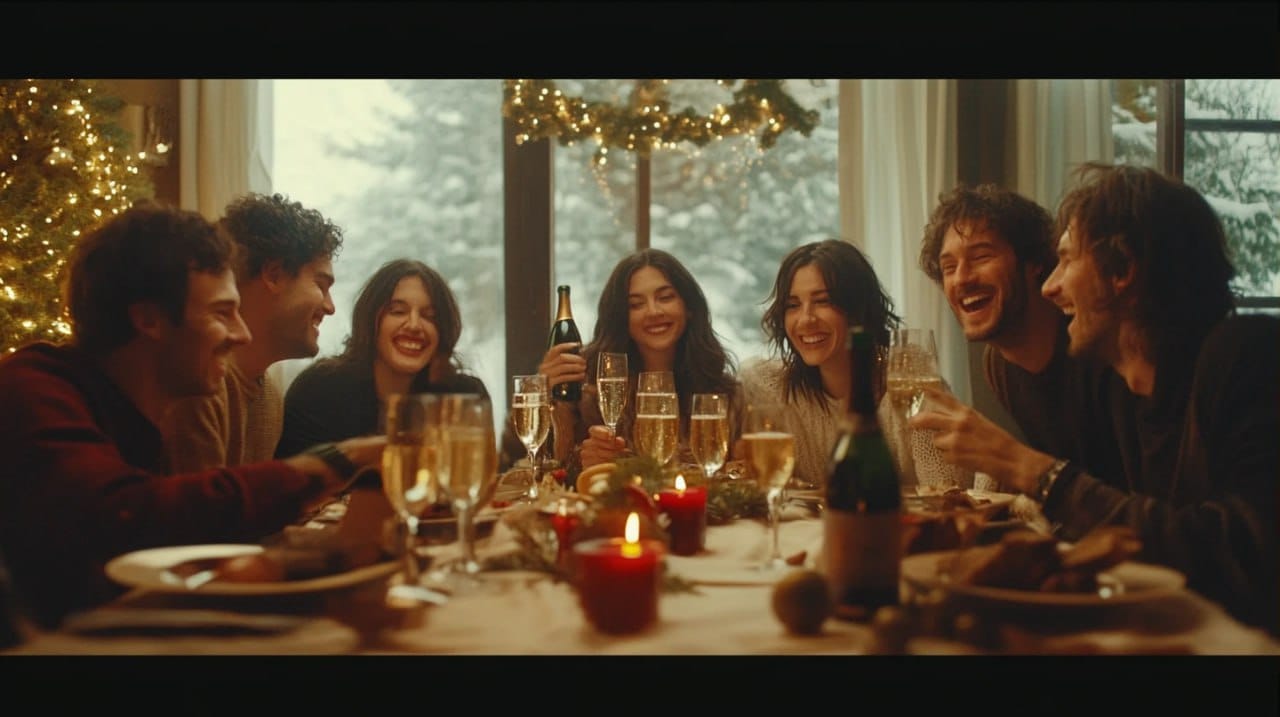
Space for Yourself. In a friendly gathering, it's easier to maintain personal boundaries. You can say, "I want to leave early" or "I need some time alone" without hearing reproach or resentment. Friends emphasize choice, not duty. And if the relationship is strong, it will withstand any choice you make.
Cons
Risk of Superficial Interaction. If the gathering is random or too large, the evening might end up shallow. There's laughter, toasts, music—everything seems in place, but something is missing. Not all parties give a sense of closeness and unity. Sometimes celebrating with friends turns into background noise.
FOMO. Fear of missing out—FOMO—often leads people to accept invitations to events, parties, or trips not because they want to but to avoid feeling left out. The problem is that doing something just to seize an opportunity can overlook your true desires.
Unequal Contribution Among Friends. Often, one or two people end up organizing everything, while others merely show up. This creates an imbalance—some invest emotionally, financially, with their time, while others just participate. This dynamic, familiar since school days, can ruin an evening: some feel burnt out, others like mere guests. If details aren't discussed ahead, even a great group can face disappointment.
A Mixed Christmas Celebration: The Ideal Solution Often Overlooked
A Christmas dinner doesn't have to be strictly friendly or family-oriented—it’s a flexible holiday much like life itself, often dependent only on your desires.
There are several compromise ways to celebrate Christmas, allowing you to spend enough time with everyone. While you can't be in two places when the clock strikes midnight, there's no reason you can't exchange gifts and share important words with all.
- Family First, Then Friends. Start the evening at home, wish your family a merry Christmas, then head to a friend's place or invite them over.
- Different Days, Different Circles. December 24rd with friends, and 25th with family, or vice versa. The shows are the same, the dishes still fresh, and a holiday atmosphere continues to reign worldwide. Celebrate the holidays as you like and enjoy each day.
- Joint Celebration. Sometimes close friends and family get along perfectly well at the same table—especially if they often meet before, are family friends, and you've prepared something unifying: a quiz, Secret Santa, or a gift hunt.
Why This Is the Best Solution
- You don't offend anyone.
- You have more freedom to tailor your holiday schedule.
- This approach eliminates the need for a rigid script when it comes to the celebration.
What Your Choice Says About You
Like any decision, choosing whom to spend Christmas with is a reflection of you. Where and with whom you choose to celebrate this day can accurately reflect your inner state, priorities, and even your current life stage.
If You Choose Family
Stability, comfort, and control are important to you. Whether in good shape or emotionally spent after a year of changes—a new job, a move, a breakup—you crave predictability and care.
If You're Drawn to Friends
You crave movement, socializing, and change. This Christmas is a chance to feel alive and free. This choice is often made by those who have distanced themselves from family and resolutely build an independent life, without looking back for comfort. Friends become the new "tribe" where you explore yourself and the world.
If You Want to Be Alone
You know how to listen to yourself and aren't afraid to stand apart from the system insisting that spending Christmas alone is outrageous. Perhaps you had an overwhelming year, and you're choosing self-care, silence, and tranquility. Or maybe you've recently cut off toxic influences and are relearning to appreciate your own company.
The key is to distinguish mindful solitude from escapism or depression. If the clamor of a festive celebration tempts you, and you find yourself feeling left out, it's never too late to change course and meet up during the holidays.
How to Decide Without Guilt
Many people feel stressed not because of the decision itself, but because they fear offending someone. Here are some techniques to help you choose your celebration format with respect to yourself and others:
- Identify Your Real Needs — make choices based on what you need, not on what you owe others;
For Example
- I need to rest, not party all night, so I'll stay home.
- I need to see my mom, and I can have fun with friends another day since they're always around, but she is far away.
- I want to feel that this holiday can be mine alone, not just be part of a group because it’s expected.
- Discuss Your Decision Early — inform family and friends of your choice at the start of December or at least by the 20th. Don’t delay and use straightforward language.
- Allow Yourself to Be Unconventional — if you want to spend the holiday alone with a book or in the mountains without internet, that’s your right. Even if it surprises someone, your peace and genuine enjoyment of the holiday are what matter most;
- Don’t Justify Your Decisions — the more explanations you give, the more responsibility for others’ feelings you assume. Simply state that this decision is very important to you right now, and it's just the way it is.
Christmas is just one day a year, and it would be a shame to end it with disappointment if you spent it differently than you wanted.
Family? Wonderful. Friends? Great. Alone? Absolutely fine. The key is to make a conscious choice.